The double-tap strike on a Ukrainian mall shows how the war keeps getting crueller
The Russian attack in Kryvyi Rih killed and wounded civilians and showed how repeat blasts make rescue more dangerous and fear more persistent.
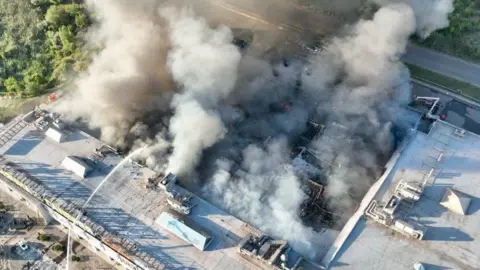
An attack that changes how cruelty is measured
The Russian strike on a shopping mall in Kryvyi Rih was not just another number in a long war. It was, above all, a demonstration of how the method of attack can multiply the horror. Ukrainian authorities described a two-stage hit: drones arrived first, and then a second wave came while rescuers were responding. That pattern, often called a double tap, makes rescue more dangerous and deepens the fear that civilians already live with every day.
The scale of the attack is brutal. At least 15 people were killed and more than 130 were injured, including many children. The city also carries symbolic weight because it is Volodymyr Zelenskyy’s hometown. That means the strike is read not only as a military attack, but also as a deliberate blow against the morale of a community already under constant pressure.
Double tap is not just a tactical detail
The phrase may sound technical, but the effect is not. A second strike on the same area while emergency crews are already working changes the entire meaning of the attack. First, it complicates evacuation. Second, it increases the danger for rescuers, medics and volunteers. Third, it turns the area into a temporary trap where every movement is weighed against fear. That is why the strike is not just a battlefield event. It is a method of terror.
Zelenskyy called the attack openly cynical and despicable. His response matters politically because the war has already turned Ukrainian cities into places where danger does not come only from the front line, but also from repeated waves of drones and missiles. When an explosion is repeated at the same site, the message is clear: the target is not just infrastructure. The target is the humanitarian response itself.
What the attack reveals
- Civilian protection remains an indirect target.
- Rescue work becomes part of the risk.
- Terror is not measured only by the death toll.
- The strategy is meant to erode daily life and confidence.
A war that keeps hitting the rear
Kryvyi Rih has been struck repeatedly during this war, and that matters too. When a city takes hit after hit, it stops being an isolated incident and becomes an example of accumulated exhaustion. Every new strike stacks on top of the trauma already there. Every casualty figure adds to another casualty figure. And every air raid warning reintroduces the feeling that there is no truly safe space.
The wider strategic context matters as well. While Ukraine tries to protect its cities and energy system, Russia continues to use drones and missiles to sustain pressure. Ukraine, for its part, has intensified attacks on Russian energy and logistics facilities, arguing that they are legitimate targets because they help finance the war. The result is a war of attrition in which the civilian and industrial dimensions are constantly mixed together.
In that setting, double-tap attacks have a special value for the side that uses them: they do not just destroy, they force the enemy to think twice before returning to the impact site. That hesitation is part of the weapon. The second blast does not only kill or wound. It changes how humans organize their response.
The political cost of attacking civilians
Every time an attack like this happens, Kyiv can present it not only as a local tragedy but also as evidence of the war’s character. That matters internationally because the argument is no longer only about battlefield positions. It is also about whether the world keeps supporting Ukraine with air defense, intelligence and reconstruction help. A strike on a shopping mall carries much more emotional weight than a military bulletin about abstract targets.
There is also a messaging component. Hitting a commercial site in an interior city, far from the immediate front, sends a signal that nowhere is immune. That supports Russia’s psychological pressure campaign and aims to wear down confidence in the state’s ability to protect people. But it can also do the opposite: reinforce Ukrainian determination to keep seeking external support and more air defenses.
Bottom line
The Kryvyi Rih attack leaves a painful lesson: in a war like this, cruelty is measured not only by the force of the explosion, but by the timing and by what happens next. The second strike, launched when rescuers are already working, turns the attack into something more than physical destruction. It becomes a tactic designed to spread fear and to show that civilian safety remains one of the most vulnerable battlefields.
That matters beyond one mall because repeated blasts reshape the geography of danger, the timing of rescue and the psychology of everyone nearby.