Aruberuto Makoto: what the full videos actually show
The longer footage corrects parts of the viral account but confirms the filming, hotel proposition, and sexual and racist remarks.
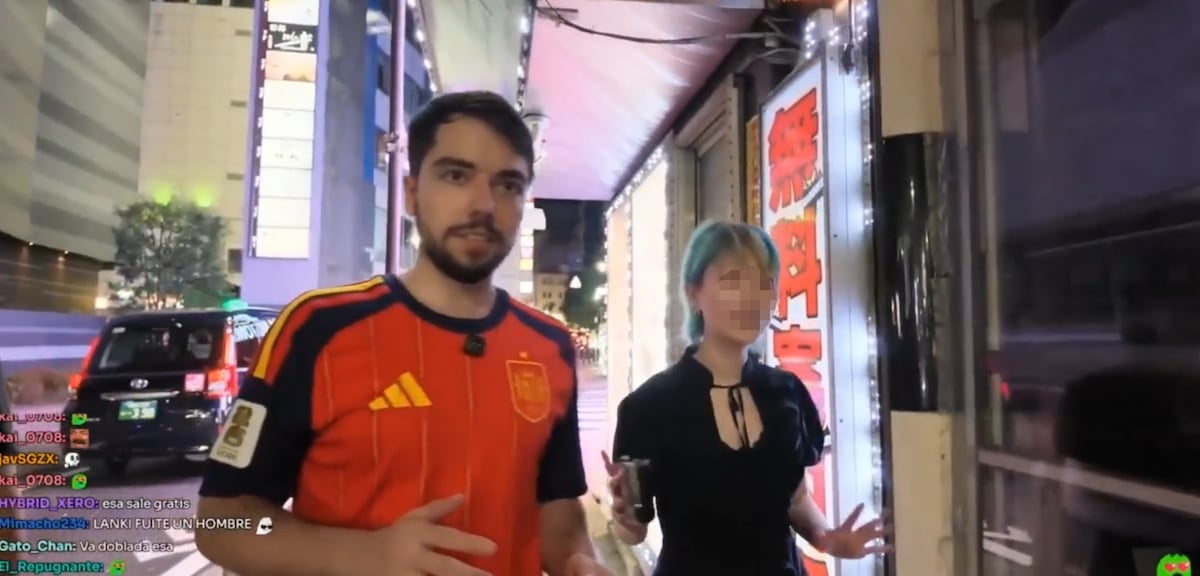
What changes after reviewing the longer videos
Two new uploads on Aruberuto Makoto’s official channel provide substantially more material than the viral clip. “Watch it before it is deleted: the full video” runs for 38 minutes and replays the livestream sequence while Alberto Alonso pauses and comments on it. “My controversy went too far” is another 38-minute response to other creators. Neither upload is a neutral record: both are selected and narrated by the person under criticism. They nevertheless contain a longer replay, specific admissions, and details that require several categorical claims to be corrected.
This review compared the complete Spanish captions with reports by EL PAÍS, Infobae, and MARCA. The timestamps below refer to the first response video, not the original livestream clock. Captions can establish words and sequence, but they cannot always settle gestures, movement, or physical contact outside the frame.
What the material confirms
Alonso and his companions deliberately filmed a woman whom Alonso himself described as drunk. The replay includes instructions such as “record” at about 04:27, “record from a distance” near 06:25, “keep going” around 10:25, and “record properly” near 13:24. “Keep going” can mean continue filming and does not, by itself, prove that the group had followed her before the encounter.
At approximately 10:04-10:19, the woman says she is looking for friends. At 14:20-14:31, Alonso discusses asking whether she wants to go to a hotel, a proposition he acknowledges in his commentary. The sexualized exchange that drove the controversy appears at 15:39-15:57, including “this one is free” and a companion’s remark about pushing her against a wall. The captions do not consistently identify speakers, so each quotation should be attributed cautiously, but the exchange itself is not meaningfully disputed.
Alonso also makes significant admissions. At 08:31-09:13, he calls his behavior ugly, says he acted badly, and says he should apologize. At 17:40-18:12, he acknowledges that the words are his, describes them as appalling, and says he would not act that way again. At 19:13-19:57, he admits that filming the woman’s face directly was wrong and again mentions an apology. In the second video, he reiterates that he too was very drunk and that making those comments was bad. Intoxication may explain a condition; it does not remove responsibility.
What is not clearly demonstrated
The most important correction concerns following and chasing, terms used by MARCA in its headline and video caption. Alonso says that the woman approached the group. The commented replay begins after the interaction is already underway, and its captions do not document any earlier pursuit. The available material therefore does not establish as fact that Alonso chased her. His own narration, however, is not independent proof of everything that happened before the camera was recording.
The material also does not establish that Alonso restrained the woman, touched her, or physically tried to take her to a hotel. Around 21:11-21:29, he denies those acts and claims that she touched him. That remains his account rather than an independently verified fact. The verbal hotel proposition is acknowledged; turning it into a proven physical attempt to move her adds something the cited evidence does not show.
The third man’s intervention
The confrontation begins at roughly 21:05. The news reports call the man a passerby who helped the woman and demanded that filming stop. Alonso alleges, without independent evidence, that he belonged to a Nigerian criminal organization and was holding or dragging the woman. At 21:11-22:55, Alonso interprets the movement that way; EL PAÍS instead describes the woman holding the man’s arm. Captions cannot resolve these competing visual interpretations.
One admission remains especially relevant. The sequence includes “mate,” “don’t,” and, according to Alonso’s translation, “tasukete,” a Japanese request for help. At 26:29-28:39, he acknowledges that the woman asked for help several times and says he did not understand her at the time. The exact addressee, tone, and translation should be checked against the original audio by a Japanese speaker, but the admission prevents the encounter from being described as unambiguously normal.
Around 30:20, “okay, let’s go” is heard, but the captions do not establish who leaves with whom. Infobae says the stranger left with the woman; EL PAÍS only says Alonso reappeared without her. The ending therefore cannot be reconstructed from text alone.
Racism and unsupported claims
Racist remarks are present in the material. At about 33:41-33:56, a partly censored slur targets the third man, and at 34:10-34:24, Alonso says that speaking Japanese makes Black people afraid. He later calls those words highly unfortunate. The context of an argument does not erase their content.
There is no independent evidence that the woman was a sex worker, that she knew the third man, that a commission was involved, or that he belonged to a criminal organization. Those are Alonso’s interpretations of the neighborhood, a bag, and movements in the scene. Nor do the cited reports establish sexual assault, attempted rape, or a police or judicial finding. Reporting any of those hypotheses as fact would replace one overstatement with another.
Evidence summary
- Confirmed or acknowledged: deliberate filming; apparent intoxication acknowledged by Alonso; a verbal hotel proposition; sexual remarks; intervention by a third man; racist language; requests for help that Alonso says he did not understand.
- Claimed by Alonso: the woman approached first; she touched him; the third man restrained her; the two were connected to sex work or organized crime.
- Claimed or interpreted by outlets: the man helped her; Alonso followed or chased her; the conduct amounted to sexual harassment.
- Not established here: earlier pursuit, physical contact by Alonso, an attempt to transport her to a hotel, the relationship between the woman and the man, criminal affiliation, the exact ending, or a definitive legal classification.
Editorial conclusion
The longer material shows that not every formulation in the coverage was demonstrated by the available sequence. “Chasing” is stronger than the captions and replay support. Additional context, however, does not erase the core event: a woman described as drunk was deliberately filmed, a hotel was proposed, and sexual and racist remarks were made that Alonso himself has called improper.
The precise formulation is that Alonso was accused of or criticized for harassment, and that outlets classified the conduct that way, not that a conviction or proven sexual assault exists. His defense challenges some expansions of the story while his own admissions confirm other serious criticism. A full review requires neither believing every headline nor accepting every defense, but matching each claim to the evidence that actually supports it.