Keiko Fujimori Becomes President of Peru and Makes History
Keiko Fujimori was sworn in as Peru's first elected female president after a narrow runoff, with regional leaders present and promises of tough-on-crime policies.
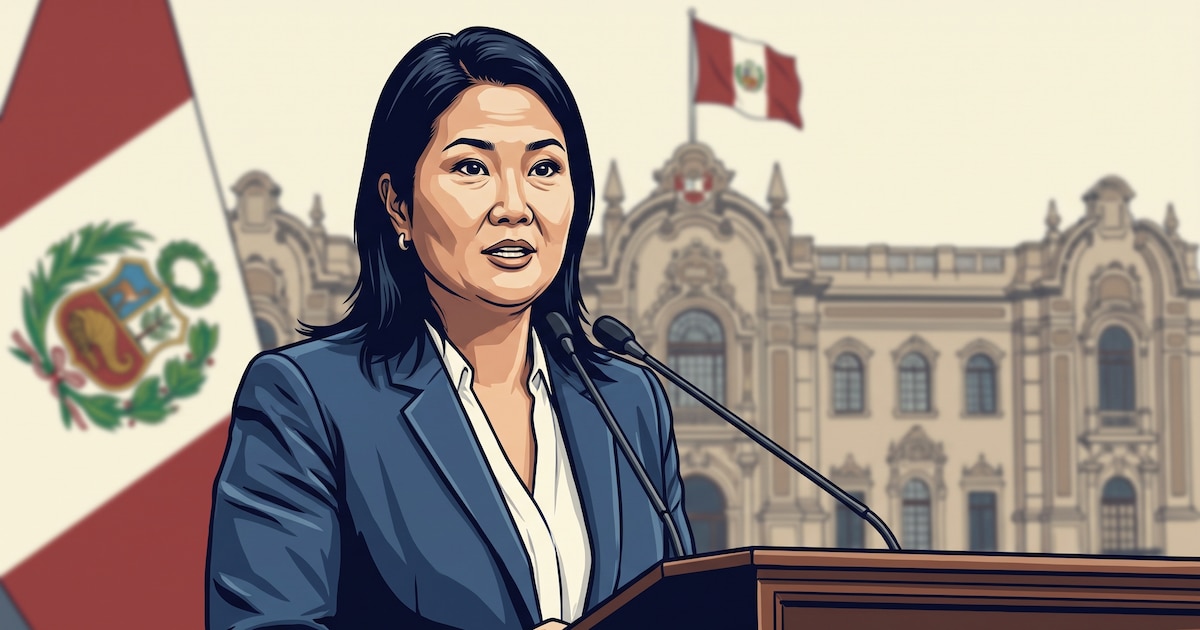
Keiko Sofia Fujimori Higuchi assumed the presidency of Peru on Tuesday, July 28, 2026, for the 2026-2031 term, becoming the first woman elected by popular vote in the country’s history. The leader of the Popular Force party won the June runoff by a razor-thin margin of 49,641 votes (50.135% vs. 49.865%) against leftist Roberto Sanchez, after losing three previous runoffs in 2011, 2016, and 2021.
A day loaded with symbolism
The ceremony took place on the same day that her father, the late former president Alberto Fujimori, took office 36 years ago, and also coincided with Peru’s Independence Day. The day included a Te Deum mass at the Cathedral of Lima, the swearing-in before the bicameral Congress — led by Parliament Speaker Miguel Torres — and the swearing-in of her cabinet of 19 ministries at the Government Palace.
Vice President Luis Galarreta assumed the role of President of the Council of Ministers, while economist Elmer Cuba, former director of the Central Reserve Bank, was designated Minister of Economy. In her speech, Fujimori pledged to crack down on rising crime — homicides rose from 1,000 in 2018 to 2,600 in 2025 — and to confront the El Nino phenomenon, forecast to be the most intense since 1998.
Regional leaders and a call for reconciliation
Attending the ceremony were King Felipe VI of Spain and the presidents Javier Milei (Argentina), Jose Antonio Kast (Chile), Rodrigo Paz (Bolivia), Daniel Noboa (Ecuador), and Yamandu Orsi (Uruguay), among other regional leaders. The United States sent Deputy Secretary of State Christopher Landau, representing President Donald Trump.
In her message, Fujimori called for “national reconciliation” and stated that “thinking differently does not make us enemies.” However, her rival Roberto Sanchez rejected the gesture and once again questioned the legitimacy of the electoral process that brought her to power, in a political context that anticipates a governability with a divided opposition and close scrutiny over the fulfillment of her campaign promises.